Cart
February 10, 2026
Pregnancy Loss and Stillbirth: Ways to Honor a Life and Support a Grieving Mother
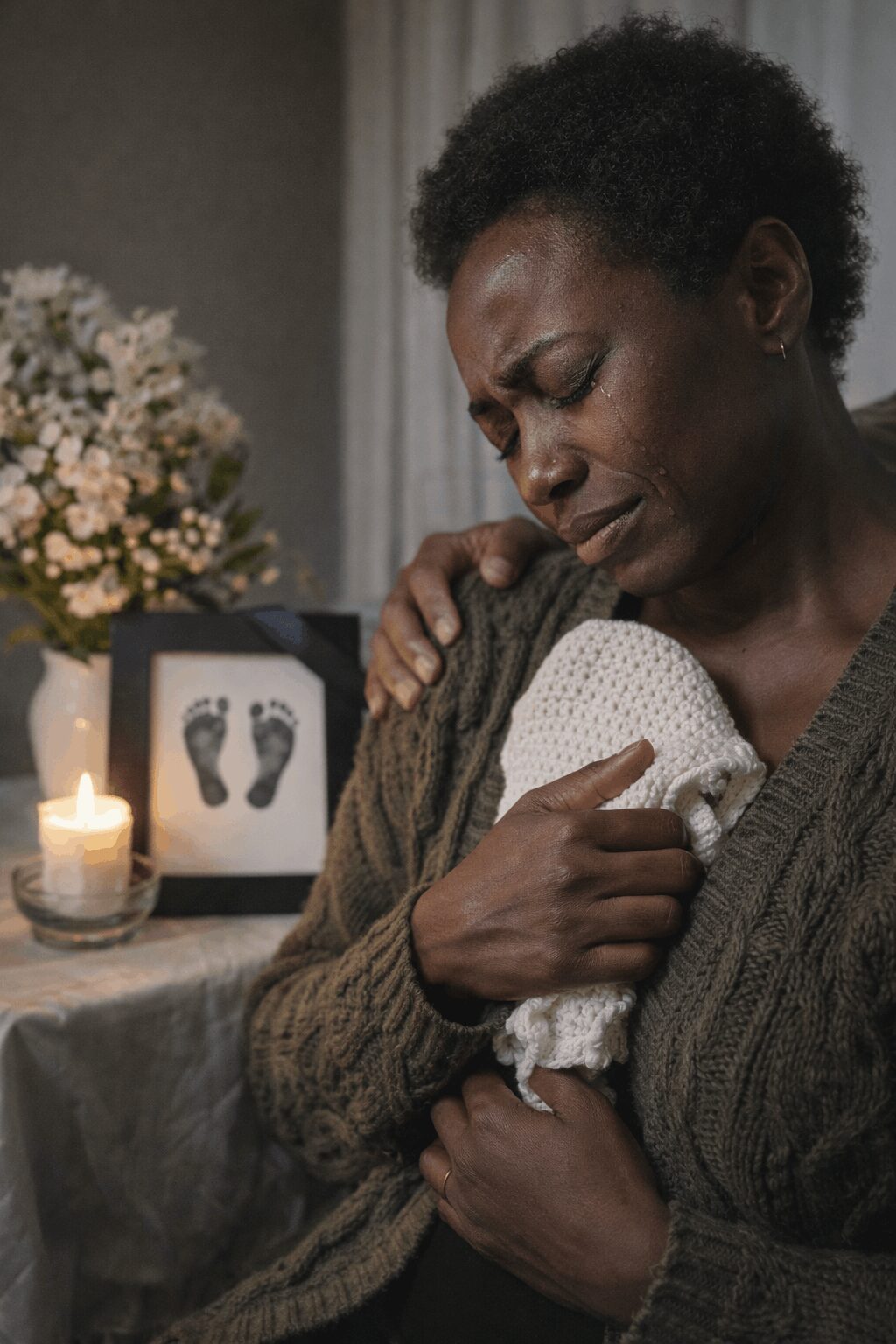
Pregnancy loss and stillbirth are heartbreakingly common, affecting thousands of families every year.
Even with how common this is, grief is still too often minimized, misunderstood, or treated as something people should simply move past. In my work supporting people through loss, I’ve seen how much it helps when supporters focus on two steady anchors: naming the loss out loud and staying present over time.
You don’t have to find the perfect words. You just have to make the grief less lonely.
This guide offers practical, compassionate ways to honor a life and support a grieving mother, with language you can use, actions that help, and simple ways to show up through the tender milestones ahead.
The Quick Version: How Support Changes Over Time
- First 24 to 48 hours: Acknowledge the loss directly, use the baby’s name if the family has shared it, and offer one concrete task.
- First two weeks: Bring food, reduce errands, help with childcare if appropriate, and protect the mother from having to update others.
- First two months: Keep checking in after the initial wave of support fades. Offer companionship, not advice.
- Milestones: Due date, anniversaries, holidays, Mother’s Day, and awareness days can hit hard. Put reminders on your calendar.
- Remembrance: Small rituals matter. A candle, a letter, a tree, a memory item, a donation, a tradition.
- Family support: Partners and siblings grieve too, often quietly. Support the whole system.
If you’d like help staying consistent over time, Timely Presence offers an option for ongoing support for grieving loved ones.
Naming the Loss: Why Validation Matters
The aftermath of pregnancy loss or stillbirth can leave parents feeling unseen and isolated. Disenfranchised grief, a term used when a loss is not openly acknowledged or accepted by others, is common for families after pregnancy loss. As Dr. Carrie Cormack explains, “Often, we call a loss during pregnancy or even an early loss ‘disenfranchised grief.’ It’s grief that’s sometimes not openly acknowledged or accepted by others” (musc.edu).
That lack of recognition can deepen the pain. Validation does not fix grief, but it changes the emotional environment around it. It tells the mother: your baby mattered, your love is real, and your grief makes sense.
Naming the loss is not “making it worse.” It’s making it real, and that is where support can actually begin.
Simple ways to validate:
- Name what happened without euphemisms: “I’m so sorry your baby died.”
- Use the baby’s name if the family has shared it.
- Say “I’m here” more than once, not just at the beginning.
- Avoid searching for explanations or silver linings.
- Let silence be okay. Quiet presence can be supportive.
If you want more support options and places to find help, you can explore Grief Support Resources.
What to Say (and What Not to Say)
Many people stay silent because they fear saying the wrong thing. The truth is that most grieving mothers do not need perfect language. They need honest acknowledgment and steady care that doesn’t disappear after the first few days.
Say this (phrases that usually help)
- “I’m so sorry. I’m here with you.”
- “Your baby mattered. I’m holding you in my heart.”
- “I don’t know what to say, but I want you to know I care.”
- “I’m thinking of you today. You don’t have to respond.”
- “If you want to talk about your baby, I’m here to listen.”
- “Would you like me to use their name?”
- “This is not your fault.”
- “I’m bringing dinner on Tuesday. No need to host.”
- “Would you like company, or would quiet support feel better today?”
- “I’m going to check in again next week. You’re not alone.”
Avoid this (even when well intended):
- “At least you can try again.”
- “Everything happens for a reason.”
- “It was for the best.”
- “You can always have another baby.”
- “At least it was early.”
- “Be strong.”
- “Try to stay positive.”
- “Time heals everything.”
Quick table: instead of this, try this
| Instead of… | Try this… |
| “Let me know if you need anything.” | “Can I drop off dinner tomorrow or Friday?” |
| “At least you…” | “I’m so sorry. This is deeply unfair.” |
| “You’ll be okay.” | “I’m here with you, even when it’s not okay.” |
| “It wasn’t meant to be.” | “Your baby mattered, and I’m so sorry.” |
| “Try to stay positive.” | “You don’t have to carry this alone.” |
| “I don’t want to upset you.” | “I care about you and I’m not going anywhere.” |
If you already said the wrong thing
A simple repair can mean a lot:
- “I’ve been thinking about what I said, and I want to say it better. I’m sorry if it hurt. I care about you.”
If you’re unsure what to say, choose honesty over advice, and presence over problem-solving.
What Support Can Look Like in the First Few Weeks
When words fall short, practical help can provide meaningful relief to grieving families. According to a study published in the Journal of Loss and Trauma, bereaved parents who received tangible support reported lower levels of grief-related distress.
Support that helps most tends to be specific, low-pressure, and consistent.
Practical support (reduce daily load)
- Drop off meals or groceries, no hosting required
- Handle laundry, dishes, or light household tasks
- Offer childcare for short windows (if appropriate and wanted)
- Run errands or manage pharmacy pickups
- Send delivery gift cards for essentials
- Offer to drive them to appointments if they want company
Emotional support (presence without fixing)
- Sit quietly with her if she wants company
- Offer a short walk together
- Send a simple message: “Thinking of you today.”
- Be willing to hear the story more than once
- Let tears and silence be normal
- Ask what kind of support feels best right now: talking, distraction, or quiet presence
Protective support (shield her from extra strain)
- Offer to notify others on her behalf
- Intercept “what happened” questions if she wants privacy
- Coordinate help so she is not managing logistics
- Ask consent before organizing group gestures
- Let her set the pace for visitors
For more on miscarriage-specific support, see our post “Honoring the Grief of Miscarriage.”
Grief support is most impactful when it focuses on presence and tangible aid, rather than advice.
Remembrance and Ritual: Gentle Ways to Honor a Life
Rituals and remembrance practices help families process loss and honor the memory of their child. In Japan, the Mizuko Kuyō ceremony provides one example of a structured remembrance practice, involving offerings and prayers to commemorate a lost pregnancy or stillborn child.
You don’t need a formal ceremony to honor a life. Small acts of remembrance can bring dignity and comfort, especially when the rest of the world seems to move on too quickly.
Gentle ideas, from simple to more involved:
- Light a candle on hard days
- Write the baby a letter
- Speak the baby’s name aloud (if the parent wants that)
- Plant a tree or flowers
- Create a small memory space at home
- Make jewelry with initials, a birthstone, or a symbolic charm
- Keep a special blanket, item, or symbol in a memory box
- Donate to a baby loss organization in the baby’s honor
- Start a small tradition: a yearly walk, a quiet meal, a handwritten note
- Invite siblings to draw pictures or choose a small keepsake (if appropriate)
Remembrance is not “holding on.” It’s love taking a form that can still be carried.
For more on national remembrance, see “National Stillbirth Prevention Day: You Are Not Alone.”
Milestones That Can Be Especially Tender (Dates, Holidays, Awareness Days)
Certain dates, such as due dates, the anniversary of the loss, or holidays, can trigger renewed waves of grief. Infant loss remembrance day is observed each year on October 15 (en.wikipedia.org).
The most supportive thing you can do is remember these dates without making the mother manage reminders for you.
Milestones to consider putting on your calendar:
- Original due date
- Date of loss or delivery
- Mother’s Day and Father’s Day
- Holidays and family gatherings
- October 15 (if it feels meaningful to the family)
Message templates you can send on tender days
- “I’m thinking of you and your baby today. No need to respond.”
- “I know today might be heavy. I’m here with you.”
- “I’m remembering your baby today. Would you like to share a memory, or would you prefer quiet support?”
- “I’m sending love on a hard day. You’re not alone.”
- “I’m holding space for you today. If you want company, I’m here.”
Gentle check-ins and simple gestures on these days can be deeply meaningful for grieving mothers and families.
Supporting Partners and Families Too
Grief after pregnancy loss or stillbirth affects the entire family, not just mothers. Fathers, in particular, often suffer in silence. Research shows that 40% of fathers report significant grief symptoms following a miscarriage (Journal of Men’s Health). Yet their mourning is frequently unacknowledged, another form of disenfranchised grief.
Children and siblings can also experience grief; including them in remembrance or support activities can help the whole family heal.
Ways to support partners:
- Check in directly instead of assuming they are “the strong one”
- Offer practical help that reduces household load
- Give permission for grief to show up differently
- Avoid comparing grief styles or timelines
- Offer space for them to talk without trying to “fix” the emotion
Supporting siblings and children:
- Use simple, honest language appropriate to age
- Invite them into gentle remembrance if they want (drawing, candle, letter)
- Keep routines steady while allowing feelings
- Offer extra patience around sleep changes, regressions, or behavior shifts
- Let them ask the same questions more than once
For more on how family and friends can help, you can visit our blog or learn more about Timely Presence here..
If You Are the Grieving Parent: Asking for What You Need
If you are reading this as the parent who is grieving, it is okay to ask for what you need and to set boundaries with well-meaning friends and relatives. You’re not being difficult. You’re protecting your heart and your capacity.
You can use simple lines like:
- “Thank you for caring. I need quiet time right now.”
- “I can’t talk about details, but your support means a lot.”
- “I would love food dropped off, but I’m not up for visitors.”
- “Please use the baby’s name,” or “Please don’t mention the baby right now.”
- “I’m not ready for advice. I just need someone to be with me.”